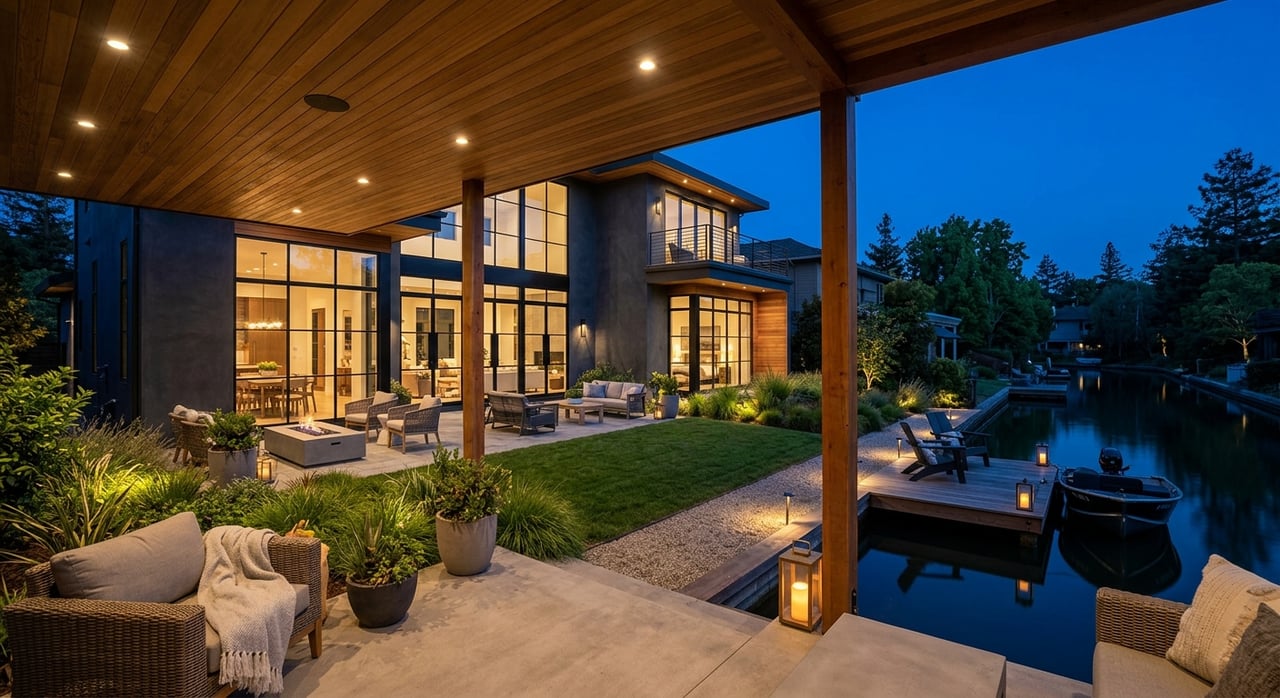
If your idea of home includes stepping out to your dock, cruising Delta waterways on a warm afternoon, and ending the day with water views from your backyard, Discovery Bay deserves a closer look. Buying on the water here can be exciting, but it also comes with rules, upkeep, and day-to-day realities that matter just as much as the lifestyle. This guide will help you understand what living on the water in Discovery Bay really looks like, what types of properties you may find, and what to think through before you buy. Let’s dive in.
Why Discovery Bay Stands Out
Discovery Bay is an unincorporated community in Contra Costa County, and the town describes it as a Community Services District rather than a city. It began in the early 1970s as a weekend and summer resort destination and has grown into a year-round community with more than 14,000 residents.
What makes the area different is how deeply the water shapes daily life. Discovery Bay is built around Delta waterways and a full-service deep-water yacht harbor, with water access that can reach San Francisco Bay. For many buyers, that creates a lifestyle that feels more recreational and connected to the outdoors than a typical inland neighborhood.
The broader Delta setting also matters. The Sacramento-San Joaquin River Delta includes more than 1,200 miles of waterways, and the town identifies it as a major destination for boating, fishing, and water sports. That means waterfront living in Discovery Bay is not just about a view. It is about direct access to an active water-based lifestyle.
What Daily Waterfront Living Looks Like
Life on the water in Discovery Bay often centers on boating and marina access. The Discovery Bay Marina is a public facility on the Delta with 263 slips or tie-ups, 630 dry-storage spaces, fuel sales, haul-out and boat repair, pumpout, showers, a restaurant, a snack bar, and a swimming area.
That mix of amenities gives the area a practical, lived-in boating culture. If you own a boat now, or plan to in the future, you have more than just private docks to think about. You also have public marina support that can make storage, fueling, repairs, and launching easier.
The social side of the community also leans into the water. The town notes activities such as boat shows, boat parades, the Big Cat Poker Run, concerts on the lawn, movies in the park, crab feeds, and golf tournaments. Residents also enjoy fishing, waterskiing, wakeboarding, and casual Delta exploring.
Dining and errands are typically more local and relaxed than urban. Discovery Bay has two shopping centers and dining options throughout town, including waterfront or near-water spots like Marina Bar and Grill, Discovery Bay Golf & Country Club dining, and DB Sports Bar & Steakhouse. If you are looking for a small-town Delta setting, that can be part of the appeal.
Waterfront Homes Are Not One-Size-Fits-All
One of the most important things to know is that not all waterfront homes in Discovery Bay function the same way. The governing documents describe the residential areas as single-family dwellings only, but within that framework, there are several different waterfront configurations.
Certain areas have distinct rules tied to their lot type and shoreline conditions. The architectural standards identify inside-bay-corner lots with shared docking potential, Harbor Bay lots with special no-dock restrictions on certain parcels, Indian Slough lots with separate waterside rules, Willow Lake lots with dock-length and shoreline limits, and Marlin Bay lots where shared docking and adjacent-owner agreements may be needed.
That means two homes with water behind them may come with very different use options. One property may support the dock setup you want, while another may have tighter restrictions based on its location within Discovery Bay. Buyers should treat lot-specific rules as a core part of the property, not a minor detail.
Features You May See on Waterfront Properties
Many Discovery Bay waterfront homes include features designed around boating and outdoor living. Depending on the property, you may see docks, docking facilities, decks, walkways, boat-slip covers, and sometimes jet-ski holders.
These features can add real convenience, but they are not simply cosmetic upgrades. Discovery Bay’s standards state that docks and similar structures must be approved by the Design and Environmental Review Committee, and they also must comply with Reclamation District 800 and other public rules.
Boat-slip covers are also regulated. The standards say they are intended for weather protection only, should be as small as practical, and are subject to limits on height, material, and color. Decks, walkways, and landscaping plans also require review and approval.
Rules and Approvals Matter
Waterfront ownership in Discovery Bay comes with a review process that buyers should expect from the start. The local standards require DERC approval for docks, dock covers, many exterior changes, and landscaping, and plans often must be approved before a county building permit can be issued.
In practical terms, this means changes usually require more planning than they might in a standard inland subdivision. If you are dreaming about extending a dock, adding a cover, reworking your front yard, or changing outdoor hardscape, you will want to understand the approval path before you buy.
There are also day-to-day use rules that shape the ownership experience. The CC&Rs state that no boat or floating object may be used as a permanent residence, no waste may be discharged into canals, lagoons, bays, lakes, or waterways, and boat construction, repair, conversion, or remodeling is limited to routine maintenance.
The same documents also address nuisance noise, garbage storage, and limits on permanent storage without approval. None of this is unusual for a water-oriented community with shared waterways, but it does mean the lifestyle works best for buyers who are comfortable with structure and oversight.
Parking, Storage, and the Home Footprint
In Discovery Bay, the waterfront lifestyle often extends beyond the shoreline. Parking and storage rules can affect how you use your driveway, front yard, and side yard, especially if you own a boat trailer or RV.
The standards allow some boat trailers and RVs in driveways or front-yard parking pads, but only under specific height limits and approval requirements. Front-yard concrete is also treated as something that needs review, rather than a default way to create extra low-maintenance parking.
This is worth paying attention to if your ideal setup includes storing recreational equipment at home. A property’s water access may be a major selling point, but the land-side rules can shape how easy that lifestyle feels once you move in.
The Delta Environment Requires Upkeep
Living on the water in Discovery Bay is usually not a low-maintenance choice. Waterfront ownership here includes more moving parts than a similar-sized inland home, and the Delta environment plays a big role in that.
The town notes that invasive aquatic weeds such as Egeria densa, water hyacinth, and curly leaf pond weed are prevalent throughout Discovery Bay. These species can obstruct navigation channels and marinas, which can affect boating access and routine use of the waterways.
Reclamation District 800 also maintains nearly 19 miles of levees, provides flood protection for 3,600 properties, and manages drainage and water circulation within the town’s lakes and lagoons. For buyers, that is a reminder that levees, drainage, circulation, and shoreline conditions are part of the ownership picture, not background details.
If you want the benefits of a dock-and-go lifestyle, it helps to go in with realistic expectations. Water views are easy to fall in love with, but long-term satisfaction often comes from understanding the maintenance and planning that support that view.
Boating Basics to Know
If you plan to operate a boat on California waters, current state rules matter. California State Parks says that as of January 1, 2025, all persons who operate on California waters are required to have a California Boater Card.
There are also safety rules for families with children. California State Parks says children under 13 on a moving recreational vessel must wear a Coast Guard-approved life jacket.
These may sound like small details, but they shape how smoothly you settle into the waterfront lifestyle. If boating is a big reason you are considering Discovery Bay, these practical requirements should be part of your planning from day one.
Who Discovery Bay Waterfront Living Fits Best
Discovery Bay can be a strong fit if you want boating and outdoor recreation close to home, and if you value a small-town Delta setting over a dense restaurant or nightlife scene. It can also appeal to buyers who see real estate as both a lifestyle choice and a long-term asset, especially when the property aligns with how they actually plan to use the water.
It may be less appealing if you want minimal exterior oversight, very low maintenance, or a more urban environment. The lifestyle here tends to reward buyers who are comfortable with rules, proactive planning, and the realities of waterfront upkeep.
That is why buying the right home in Discovery Bay is often about more than finding a house with a view. It is about matching your goals with the specific lot, water access, dock potential, approval path, and maintenance expectations that come with that address.
If you are considering a move here, a careful property-by-property review can help you avoid expensive assumptions. The right guidance can make the difference between buying a waterfront dream and buying into avoidable surprises.
When you are ready to explore Discovery Bay with a strategy that looks at lifestyle, property rules, and long-term value together, connect with O'Lanre Owoborode. You deserve advice that is personal, practical, and built around the way you want to live.
FAQs
What is Discovery Bay in Contra Costa County?
- Discovery Bay is an unincorporated community in Contra Costa County that the town describes as a Community Services District, built around Delta waterways and a deep-water yacht harbor.
What is daily life like on the water in Discovery Bay?
- Daily life often includes boating, docking, marina use, fishing, watersports, and community events tied to the water, with a more local and casual dining scene than a dense urban area.
Are all waterfront homes in Discovery Bay the same?
- No. Different areas such as Harbor Bay, Indian Slough, Willow Lake, and Marlin Bay can have different dock, shoreline, and use rules.
Can you keep a boat at home in Discovery Bay?
- Often yes, but it depends on the specific lot, dock rules, parking standards, and any required approvals tied to that property.
Do docks in Discovery Bay require approval?
- Yes. Docks and similar structures must be approved by the Design and Environmental Review Committee and must also comply with Reclamation District 800 and other applicable public rules.
Is waterfront living in Discovery Bay low maintenance?
- Usually not. Buyers should expect dock care, aquatic weed issues, levee and flood awareness, and approval requirements for many exterior changes.
Are there boating rules for Discovery Bay buyers in California?
- Yes. California requires boat operators on state waters to have a California Boater Card, and children under 13 on a moving recreational vessel must wear a Coast Guard-approved life jacket.
What should buyers check before purchasing a waterfront home in Discovery Bay?
- Buyers should review lot-specific dock rights, shoreline rules, exterior approval requirements, parking and storage standards, and the practical maintenance needs that come with Delta waterfront ownership.